International Day of Women and Girls in Science: Interview with PhD student Liv Hawkins
Liv Hawkins, a doctoral researcher on the Photonic and Electronic Systems CDT programme, was recently interviewed by her former school, George Watson’s College, to mark the International Day of Women and Girls in Science. The insightful interview highlights Liv’s journey into science and the influence Watson's had on shaping her career.
George Watson’s College, located in the heart of Edinburgh, provides education from Preschool to Senior 6. Liv Hawkins attended the school for her secondary education before pursuing a path that led her to cutting‑edge research in quantum technologies.
What first sparked your interest in science?
My interest in science didn’t come from a single defining moment - it grew from a curiosity about how things work. I was drawn to the “big” questions without obvious answers, like why planets exist or what space really is.
At school, I enjoyed the mix of creativity and logic in physics, even though I didn’t imagine myself becoming a physicist. I often felt I didn’t fully understand it or wasn’t particularly good at it, and I doubted whether it was the right path for me at university. But I was motivated by the challenge and by wanting to prove, to myself as much as anyone, that I could achieve what I set my mind to.
That combination of challenge and determination ultimately inspired me to pursue science further.
Tell us about your career journey so far
I’m currently a PhD candidate in quantum technologies on the PES CDT programme. Along the way, I’ve explored a range of scientific areas, which helped me figure out what I truly wanted to specialise in.
I began studying astrophysics, drawn by those big universal questions, but quickly realised I didn’t enjoy working in an astrophysics lab. A nanoscience module made me realise I was far more interested in the small‑scale, which led me to a Master’s in nanotechnology and materials science.
I loved the hands on lab work during my dissertation, so I joined a biotechnology company where I fabricated micro sized devices and thin film materials. While I enjoyed the development side, I realised my real passion was research, which pulled me back toward university for a PhD.
The opportunity I found began with a Master’s year in electronic and electrical engineering - a completely new area for me. I enjoyed the engineering projects, but I kept gravitating toward physics. Eventually, I transferred back to the physics department, where I now work on a quantum technologies project for my PhD, which I’m genuinely excited about.
Were there any experiences, teachers or mentors who influenced you?
I was never certain what type of science I wanted to pursue, but trying projects in different areas helped me discover what I enjoyed - and just as importantly, what I didn’t. Taking risks, exploring new fields and ruling things out ultimately led me to the area I love today.
I didn’t have a single defining mentor. Instead, a series of people and experiences each contributed something valuable. I’ve been fortunate to work with fantastic professors and researchers. One sent me information about an engineering opportunity I might never have found otherwise; another helped build my confidence through guidance and exciting project work. I’m also lucky to be supported by a great network of PhD students working in similar areas. All these experiences shaped my journey and reinforced my passion for research.
What challenges have you faced, and how did you overcome them?
Plenty - both big and small. A few years ago, I was disappointed to be rejected from a course I thought was my only route into a particular specialisation. Looking back, it was a blessing. It redirected me to the project I’m working on now, which I love and might never have discovered otherwise. Setbacks can lead to unexpected opportunities; rejection isn’t always negative.
Like many researchers, I regularly face project setbacks - sometimes it feels like everything goes wrong. I’ve learned these moments aren’t personal failures but a normal part of science.
Most days I encounter things I don’t understand, but persistence and taking things step by step make a difference. I try to focus on my own goals rather than comparing myself to others, and I remind myself that every bit of time spent thinking about a challenge is progress.
What do you enjoy most about working in science today?
I love the field I work in. Researching cutting-edge technologies that could shape future computing and communications is incredibly exciting, and I’m lucky to collaborate with such talented researchers. It’s amazing to think that many everyday technologies were once developed by PhD students in labs just like ours. Research moves fast, and I love the drive to achieve something meaningful.
What advice would you give to girls who are considering a future in science?
Don’t wait until you feel like you know enough or are “good enough.” Feeling unsure is part of learning, it doesn’t mean you don’t belong. If there’s something you want to do, go for it, even if you don’t think you have the perfect background. Many of my opportunities came from simply giving things a try. Push yourself out of your comfort zone!
You don’t need to be “naturally talented” to succeed. Curiosity, persistence, and drive matter far more. Everyone learns at their own pace; confidence and experience grow over time. It’s also important to be able to talk clearly about your work - presenting and “marketing yourself” is sometimes half the battle.
Looking back, is there anything you wish you’d known earlier in your career?
There’s no single way to be a successful scientist. You don’t need a perfectly clear path or a specific mould to fit into. Follow what interests you, and the rest will work itself out. Science needs diverse perspectives, working styles, and career paths.
Not knowing something is perfectly normal; it doesn’t mean you’re not capable. In research, uncertainty is part of the job. If you don’t know the answer, you might be exploring something genuinely new. Confidence grows with experience, and over time, curiosity and persistence matter far more than knowing everything from the start.
What excites you most about the future of your field?
Quantum technologies have the potential to transform how we communicate and process data, and the work I’m doing now could enable technologies that don’t yet exist. The field is developing rapidly, with huge potential. It’s really cool to be part of shaping what comes next.
About Liv Hawkins
Olivia (Liv) Hawkins is a PhD student at University of Cambridge on the EPSRC Centre for Doctoral Training in Photonic and Electronic Systems (PES CDT) programme. Her PhD research is in the field of Quantum Network Memory Nodes based on Photonic Integrated Diamond Devices, supervised by Professor Mete Atature and funded by EPSRC training programme grant EP/Y034864/1.
Connect with Liv Hawkins: https://www.linkedin.com/in/liv-hawkins/
Credits
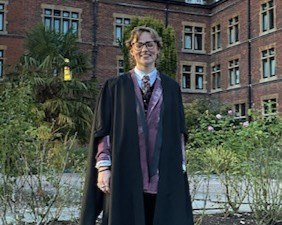
Image: Liv Hawkins, PhD researcher at University of Cambridge. © Olivia Hawkins, 2026.
Original article published by George Watson’s College Edinburgh, February 2026. Read the full article online.